Mature Driver Improvement Course: California Rules, Insurance Discounts, and DMV Requirements

What is a mature driver improvement course? A mature driver improvement course is a state-certified safety program created specifically for California motorists aged 55 and older. Under state statute, completing an authorized mature driver improvement course requires auto insurance companies to reduce liability and collision premiums for three consecutive years. Instead of paying escalating auto rates simply because of age, eligible drivers take this state-approved curriculum to refresh defensive habits, secure official DMV certification, and lock in substantial policy savings.
What Is a Mature Driver Improvement Course
The California Mature Driver Program was established by the state legislature to promote senior roadway safety through voluntary education rather than mandatory testing. Administered under the oversight of the California Department of Motor Vehicles (DMV) in accordance with California Vehicle Code (CVC) Sections 1675 through 1678, the program sets curriculum standards for training programs designed around the realities of aging and driving.
Unlike a traffic violator school course, which drivers attend after receiving a moving citation, a mature driver improvement course carries no punitive element. It is not connected to a court summons, point masking, or bail fines. Drivers participate voluntarily to maintain driving independence, learn updated traffic codes, and trigger legal insurance reductions. The resulting DMV certificate serves as official proof of completion recognized by every licensed auto insurer across California.
California Insurance Code Section 11628.3 Explained
The single most important provision for senior drivers in California is California Insurance Code (CIC) § 11628.3. This state statute is straightforward: auto insurers admitted to do business in California must provide an appropriate motor vehicle insurance premium reduction to drivers aged 55 and older who complete an approved mature driver course.
This reduction is not a promotional perk or marketing courtesy that insurers can grant or withhold at their discretion. It is a legal mandate. Once an insured driver submits a valid DMV certificate of completion, the carrier is required by law to apply the discount. Insurers establish the specific percentage reduction within actuarial guidelines approved by the California Department of Insurance, but they cannot refuse to offer a discount program to qualifying motorists who produce certification.
Who Qualifies for the State-Mandated Discount
Qualifying for the mature driver discount requires meeting a short set of legal criteria:
- Age Requirement: The driver must be at least 55 years of age on or before the date of course completion.
- Valid California Driver's License: Motorists must hold an active, non-suspended California driver license.
- Course Completion Certificate: Drivers must successfully finish a course licensed by the California DMV and obtain an official Certificate of Completion.
- Satisfactory Driving History: Under CIC § 11628.3, insurers can withhold the discount or revoke it if the driver was involved in an at-fault accident, convicted of a moving violation, or convicted of alcohol/drug-related driving offenses within the three years preceding course completion.
Drivers who maintain a standard, clean driving history have an unconditional statutory right to the premium reduction upon certificate submission.
How Much Can Drivers 55 and Older Actually Save
Auto insurance premiums generally climb after age 65 as statistical accident risks increase. The mature driver insurance discount directly offsets these age-bracket rate adjustments. The practical financial return makes the program one of the highest-yielding personal finance decisions available to older Californians.
Calculating the 3-Year Return on Course Completion
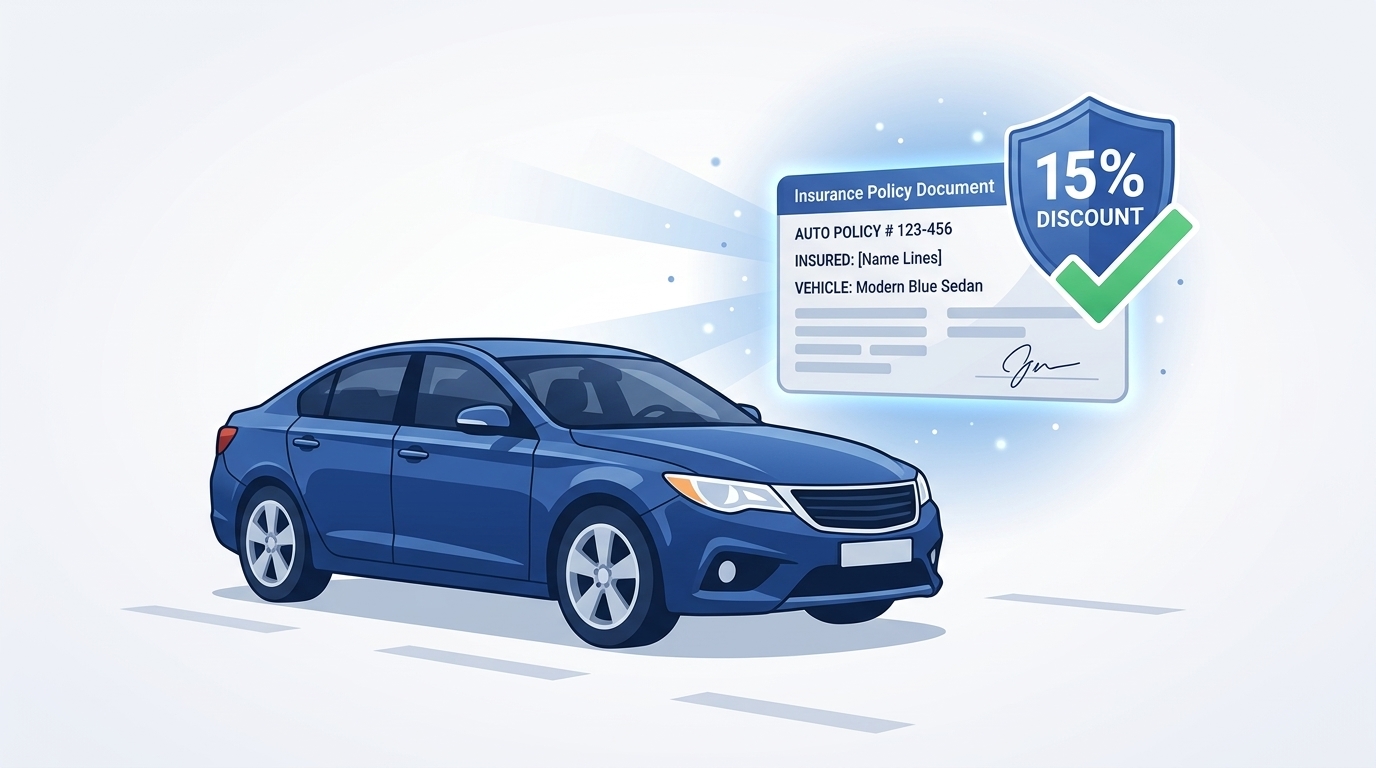
Insurance companies in California typically offer discounts ranging between 5% and 15% on covered portions of the premium. The exact percentage depends on the insurance carrier (e.g., AAA, State Farm, GEICO, Mercury, Farmers) and the driver’s overall risk tier.
Consider a standard California scenario:
- Annual Policy Premium: $1,800 per year ($900 every six months).
- Average Discount Rate: 10% applied to liability and collision.
- Annual Savings: Approximately $180 per year.
- Cumulative 3-Year Savings: $540 over the life of the certificate.
Given that an approved online course typically costs less than $25, an investment of two to three hours of study generates a return exceeding 2,000%. For households with two drivers over age 55 insuring two vehicles, the total three-year household savings frequently exceeds $1,000.
Which Coverages on Your Policy Receive the Reduction
The state mandate applies the discount specifically to liability coverage (bodily injury and property damage) and collision coverage. These two categories represent the largest dollar portions of an auto insurance bill. Comprehensive coverage (theft, vandalism, glass breakage) and uninsured motorist coverage are generally unaffected by the discount, though some carriers elect to apply the percentage across the entire policy premium as a competitive benefit.
Drivers should review their policy declarations page to confirm how their carrier applies the rate adjustment across individual line items.
What the Mature Driver Course Covers
The curriculum of a DMV-licensed mature driver improvement program is tailored specifically to senior motorists. It avoids beginner driving basics and focuses instead on practical defensive strategies, physical adaptations, and recent updates to traffic legislation.
Updating Knowledge on Modern California Traffic Laws
California traffic regulations undergo constant revisions. Most mature drivers earned their licenses decades ago, before many modern roadway designs and legal statutes existed. The course brings motorists up to date on:
- California Hands-Free Cell Phone Laws: Understanding the strict prohibitions against holding an electronic wireless communications device while driving, including navigation apps and voice-to-text rules.
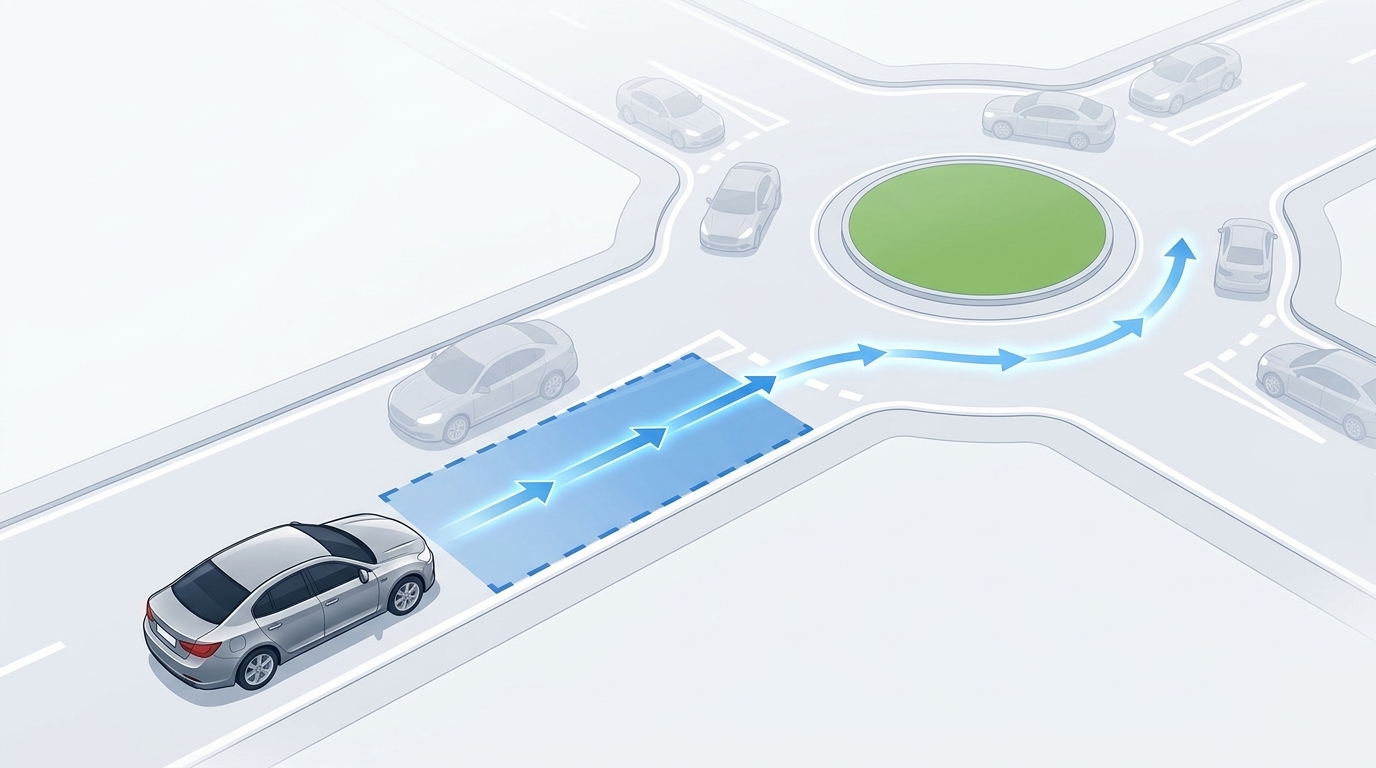
- Roundabouts and Multi-Lane Rotaries: Navigating the rapid expansion of modern roundabouts throughout California cities, including right-of-way rules and lane positioning.
- Move Over Laws: Requirements to vacate adjacent lanes or slow down when approaching stationary emergency vehicles, tow trucks, and Caltrans maintenance crews displaying flashing amber lights.
- Bicycle and Pedestrian Safety Zones: Complying with California’s Three Feet for Safety Act and understanding designated bike lanes and green-painted conflict zones.
Managing Age-Related Vision, Hearing, and Reaction Changes
Aging naturally brings gradual physiological changes that alter driving comfort. A central objective of the curriculum is providing concrete compensation strategies rather than telling seniors to stop driving:
- Visual Acuity and Glare Recovery: Managing reduced night vision, slower pupil dilation, and headlight glare from modern LED beams. Drivers learn optical strategies like scanning road edges rather than staring directly into oncoming traffic.
- Braking Distance and Reaction Latency: Understanding that reflex times lengthen naturally with age. The course emphasizes increasing following distance from the standard three-second baseline to four or five seconds to ensure adequate stopping room.
- Medication Interactions: Addressing how over-the-counter and prescription medications—such as blood pressure treatments, sleep aids, and antihistamines—can subtly impair reaction times, especially when combined.
- Intersection Navigation: Left-hand turns across oncoming traffic account for a disproportionate number of accidents involving senior drivers. The course covers intersection gap selection and sightline techniques to minimize cross-traffic hazards.
Initial Course vs. Renewal Course: Understanding the 3-Year Cycle
California DMV regulations divide mature driver education into two distinct course formats: the Initial Course and the Renewal Course. Understanding the distinction preserves continuous insurance savings without administrative interruption.
The 8-Hour Initial Requirement
Motorists who have never taken a mature driver course—or whose previous certificate expired more than a year ago—must complete the Initial Course. Under California DMV curriculum guidelines, the initial program covers a minimum of 400 minutes (approximately 8 instructional hours) of curriculum material.
Completing this initial program earns the driver their primary three-year Certificate of Completion. The certificate takes effect the date it is presented to the insurance company.
The 4-Hour Renewal Course and Deadline Rules
Because the insurance reduction expires exactly three years after the initial certificate is submitted, drivers must renew their training to maintain continuous discounts. Drivers who have completed the initial course qualify to take an abbreviated Renewal Course.
The Renewal Course covers a streamlined 200 minutes (approximately 4 instructional hours) of refreshed curriculum. Upon passing, the driver receives an updated certificate extending their discount for an additional three-year term.
The Renewal Window Rule: To qualify for the shorter 4-hour renewal course rather than repeating the full 8-hour initial curriculum, California regulations require drivers to complete the renewal course within one year of their previous certificate's expiration date. Completing the renewal class one or two months before the current three-year period ends ensures seamless rate protection with no gap in policy discounts.
How to Take the Course and Submit Proof to Your Insurer
Completing the mature driver program is simple, with flexible options designed around individual schedules.
Online Self-Paced Learning vs. Traditional Classrooms
While some drivers prefer attending community center seminars, modern online courses provide clear practical advantages. In physical classrooms, students must travel, sit through rigid eight-hour weekend lectures, and maintain fixed schedules.
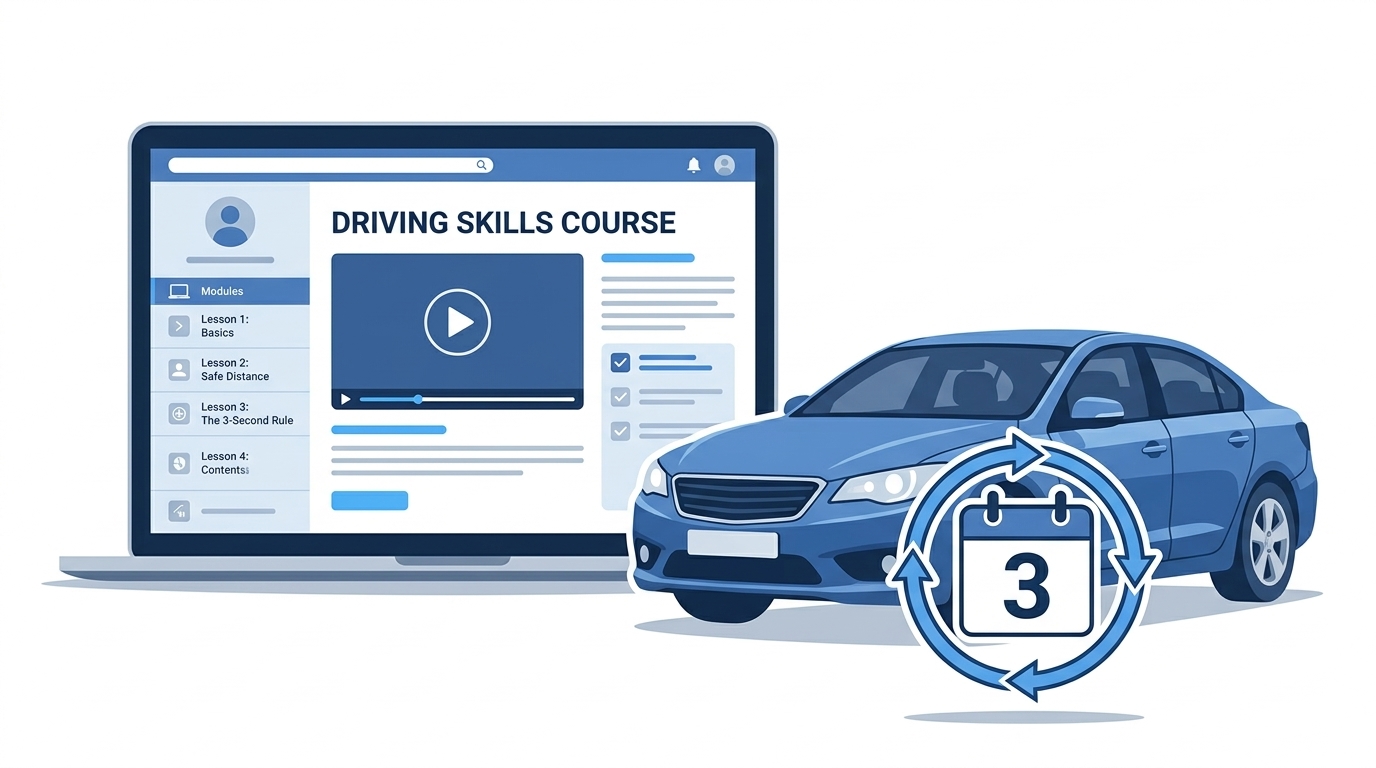
ETS offers a state-approved California Mature Driver Improvement Course online that is 100% self-paced. Drivers can study on their home computer, iPad, or mobile phone whenever convenient. You can finish one section over morning coffee, take a break, and resume later in the afternoon. The system saves your progress automatically, and there are no timers forcing you to stare at a screen. Short end-of-chapter review quizzes prepare you thoroughly for the final review.
Delivering the DMV Certificate of Completion to Your Agent
After finishing the online course, an official DMV Certificate of Completion is issued immediately. The driver must provide this document directly to their auto insurer:
- Download Your Certificate: Print the digital certificate or save the official PDF issued upon course completion.
- Contact Your Insurance Carrier: Email the PDF, upload it through your insurer's mobile app portal, or deliver a copy to your local insurance agent.
- Verify Rate Adjustment: Confirm that the discount is added to your next billing statement. In most cases, insurers apply the reduction retroactively to the date the course was completed or the certificate was received.
Common Mistakes That Cause Drivers to Miss Out on Savings
Senior drivers often miss out on hundreds of dollars in mandated savings due to minor misunderstandings:
- Assuming the Insurer Applies It Automatically: Insurers will never apply the mature driver discount without receiving an official certificate. Even if an agent knows your age, the state mandate requires documentation on file.
- Choosing an Unapproved Provider: Taking a generic online safe driving video that lacks California DMV licensing will result in immediate rejection by your insurer. Always verify that the school displays its official California DMV license number.
- Letting Certificates Lapse Past the One-Year Window: If you allow your three-year certificate to expire and wait more than twelve months to take a renewal class, the DMV requires you to retake the full 8-hour initial program rather than the convenient 4-hour refresher.
- Failing to Notify the Insurer When Switching Providers: If you switch auto insurance companies, your discount does not transfer automatically. You must submit a copy of your valid completion certificate to your new insurance company to maintain your rate reduction.
Conclusion
The California Mature Driver Improvement Program represents a rare win-win under state law. It offers drivers aged 55 and older the tools to sharpen their defensive driving awareness while legally mandating insurance savings that total hundreds of dollars across every three-year cycle. By completing a DMV-licensed online course, experienced motorists can protect their independence, safeguard their financial budget, and drive with renewed confidence on California roads.
ETS offers state-approved online courses across all 50 states – 100% online, self-paced, no timers, with free instant DMV certificate delivery upon completion.
FAQs
Is the mature driver discount mandatory for all auto insurance companies in California?
Yes. Under California Insurance Code Section 11628.3, every auto insurance company operating in California is legally required to offer a premium discount to drivers aged 55 and older who complete a DMV-approved mature driver improvement course. Insurers set their own approved rate percentages, but they cannot refuse to apply a discount upon receiving valid proof of completion.
Does taking a mature driver improvement course notify the DMV to re-examine my license?
No. Mature driver improvement courses are completely voluntary and confidential. Enrolling in or completing the program does not trigger a DMV license review, behind-the-wheel re-examination, or medical questionnaire. The certificate is used exclusively to qualify for insurance discounts.
Can you fail the mature driver improvement course?
The program is educational rather than exclusionary. The curriculum includes straightforward review questions at the end of each module to reinforce important concepts. If you do not pass a review quiz on your first attempt, state guidelines permit you to review the material and retake the test at no extra cost until you pass.
How long is the mature driver insurance discount certificate valid?
The certificate is valid for exactly three years from the date of course completion. To maintain continuous premium savings without interruption, drivers must take a 4-hour renewal course before their three-year term expires.
Can both spouses on a joint auto policy receive the mature driver discount?
Yes. In fact, insurers strongly encourage both drivers on a policy to complete the course. If both spouses are aged 55 or older and submit individual certificates of completion, the percentage discount applies across the vehicles they operate, maximizing total household savings.


